Most businesses know they "should be on social media". Far fewer know what they're trying to get out of it. They post when they remember, chase whatever format is trending, and judge success by likes. Then they decide social "doesn't work" for their industry.
Social media marketing works when it's treated like any other growth channel: a clear audience, a clear message, consistent content and numbers that tie back to the business. This guide covers what that looks like in practice, how the platforms decide who sees your content, and the approach I use with clients to grow audiences that actually buy.
Social media marketing is using social platforms to build awareness, trust and demand for your brand. It works best as a mix of organic content, community and paid amplification. Pick the platforms your buyers actually use, post consistently in the formats those platforms reward, and measure what leads to enquiries and sales, not just likes.
What Is Social Media Marketing?
Social media marketing is the practice of using platforms like Instagram, TikTok, LinkedIn, Facebook and YouTube to reach the people you want as customers, and to give them reasons to remember, trust and choose you. It covers far more than posting:
- Content: reels, short-form video, carousels, stories, posts and articles made for each platform.
- Community: replying to comments and messages, joining conversations and working with creators.
- Paid social: ads that put your best content and offers in front of specific audiences.
- Social listening: tracking what people say about your brand, competitors and industry.
- Social commerce: selling directly through shops, product tags and messaging.
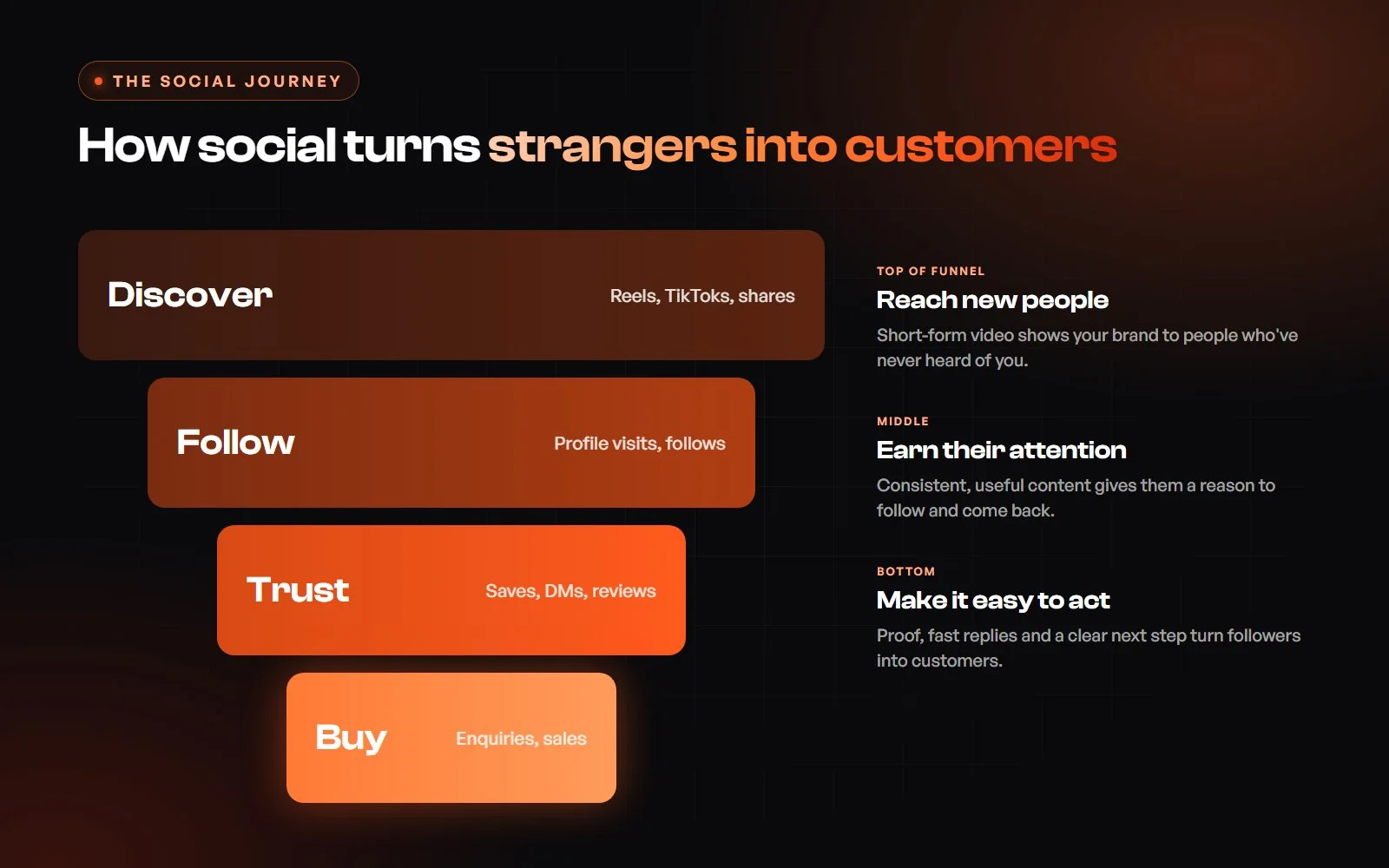
Done well, social is often the first place someone meets your brand and the place they come back to check you're real before they buy.
Why Social Media Marketing Matters
People don't just scroll social for entertainment anymore. They use it to discover products, read reviews, compare options and even search. For many younger buyers, TikTok and Instagram are where research starts.
- It builds awareness at scale. One strong reel can reach thousands of people who have never heard of you.
- It builds trust before the sale. Buyers check your profile to see if you're active, credible and worth contacting.
- It gives you a direct line to customers. Comments and DMs turn followers into conversations, and conversations into leads.
- It feeds search and AI visibility. Social posts, videos and community threads are increasingly surfaced by search engines and cited by AI assistants.
For Body Awakening Journey, organic social grew to 25K+ followers with three reels a week averaging 2K+ views each, and that audience is what fills their courses and sells out their workshops.
Organic vs Paid Social Media
Organic social is everything you publish for free. Paid social is putting budget behind content to reach people who don't follow you yet. They do different jobs, and the strongest strategies use both.
| Organic social | Paid social | |
|---|---|---|
| Cost | No media spend; you invest time, creativity and production. | You pay for reach, clicks or conversions. |
| Reach | Mostly existing followers, plus whatever the algorithm chooses to recommend. | Precise targeting by location, interests, job title and behaviour. |
| Speed | Builds gradually over months of consistent posting. | Reach and results from the day a campaign goes live. |
| Trust | Feels authentic and builds long-term relationships. | Labelled as sponsored, so it needs strong creative to earn attention. |
| Best for | Brand building, community, credibility and testing ideas. | Launches, lead generation, sales and scaling proven content. |
A practical pattern: post organically, watch which pieces outperform, then put paid budget behind the winners instead of guessing what to advertise.
How To Choose The Right Platforms
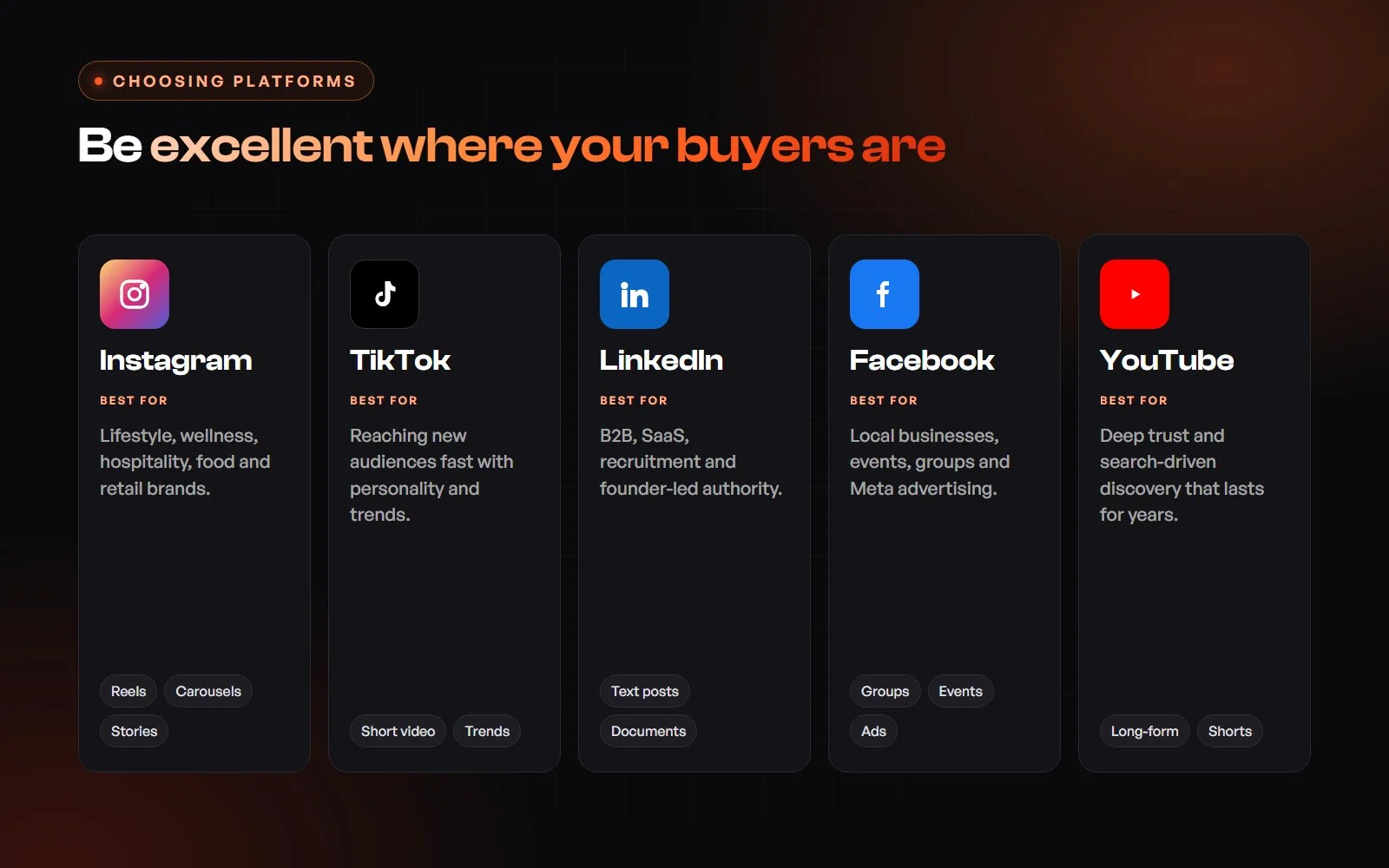
You don't need to be everywhere. You need to be excellent where your buyers spend time. Start with one or two platforms and do them properly before adding more.
Strong for lifestyle, wellness, hospitality, food, retail and personal brands. Reels drive discovery, carousels drive saves and shares, and stories keep existing followers engaged.
TikTok
The best platform for reaching new audiences fast, because content is shown based on interest rather than who follows you. It rewards personality, trends and quick, honest storytelling over polish. At Layup, a consistent TikTok presence reached 60K+ likes in under six months.
The home of B2B. Ideal for SaaS, professional services, recruitment and founders building authority. Text posts, document carousels and short videos from real people outperform polished brand content.
Still powerful for local businesses, events, groups and older audiences, and the engine behind most Meta advertising.
YouTube
The second-largest search engine in the world. Long-form video builds deep trust and keeps getting found for years, while Shorts help with discovery.
How Do Social Media Algorithms Work?
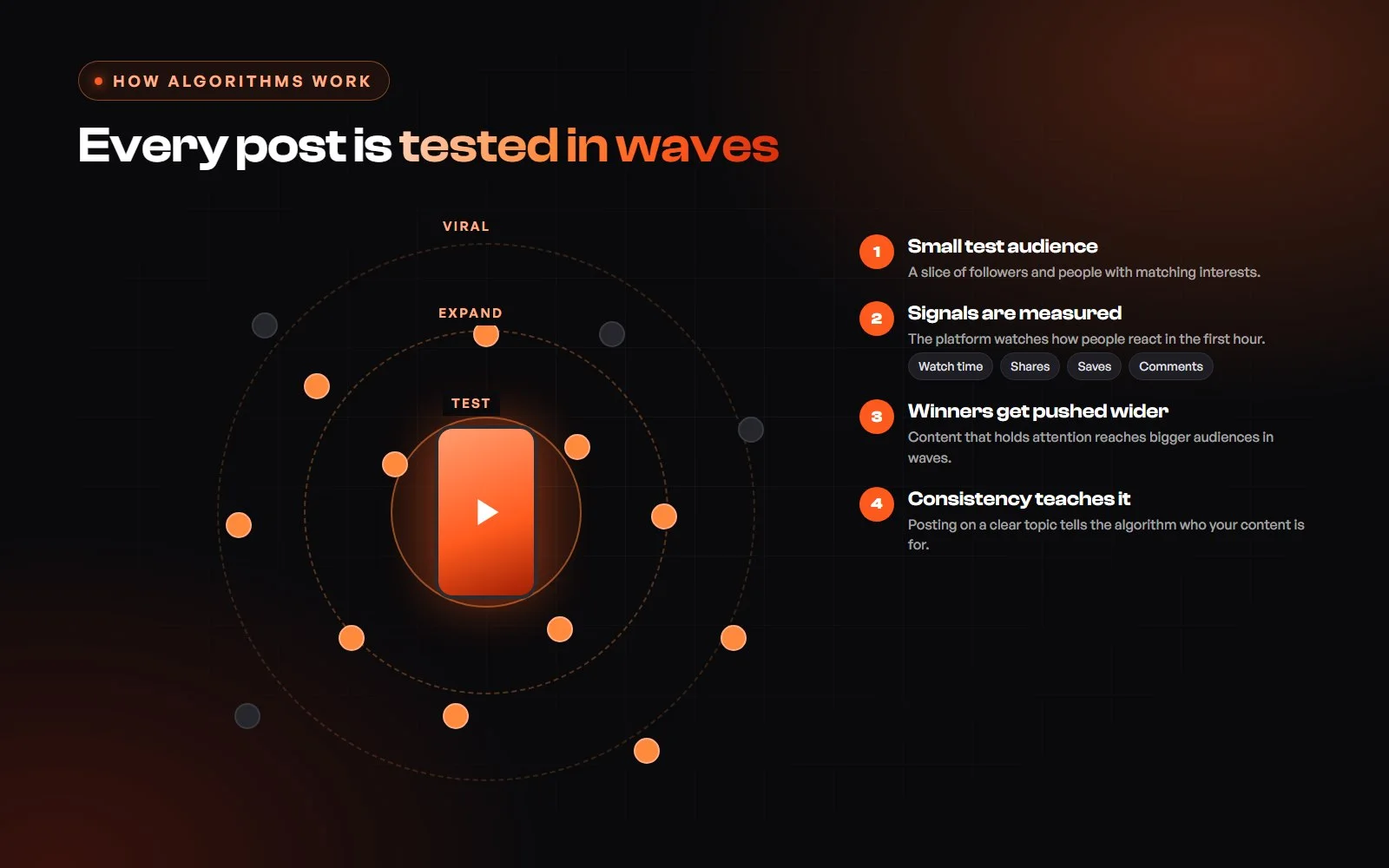
Every platform is trying to keep people watching. Their algorithms test your content with a small group of people, measure how they react, and decide whether to show it to more.
- Initial test: the post is shown to a small slice of followers and, on TikTok and Reels, to non-followers with matching interests.
- Engagement signals: the platform measures watch time, completion rate, rewatches, shares, saves, comments and profile visits.
- Expansion: content that holds attention gets pushed to wider audiences, in waves.
- Relevance over time: consistent posting on a clear topic teaches the algorithm exactly who your content is for.
The first one to three seconds decide everything. If the hook doesn't stop the scroll, nothing else in the video gets seen.
Shares and saves carry more weight than likes on most platforms, because they show the content was genuinely useful or worth passing on.
How To Build A Social Media Strategy: 5 Steps
1. Set Goals That Tie To The Business
Decide what social should do for you: awareness, leads, event sign-ups, course enrolments or online sales. A goal like "grow enquiries from Instagram by 20% this quarter" shapes every decision that follows. "Get more followers" doesn't.
2. Know Exactly Who You're Talking To
Define your audience by their problems, questions and objections, not just age and location. The more specific you are, the easier it becomes to write hooks they can't scroll past.
3. Build Content Pillars
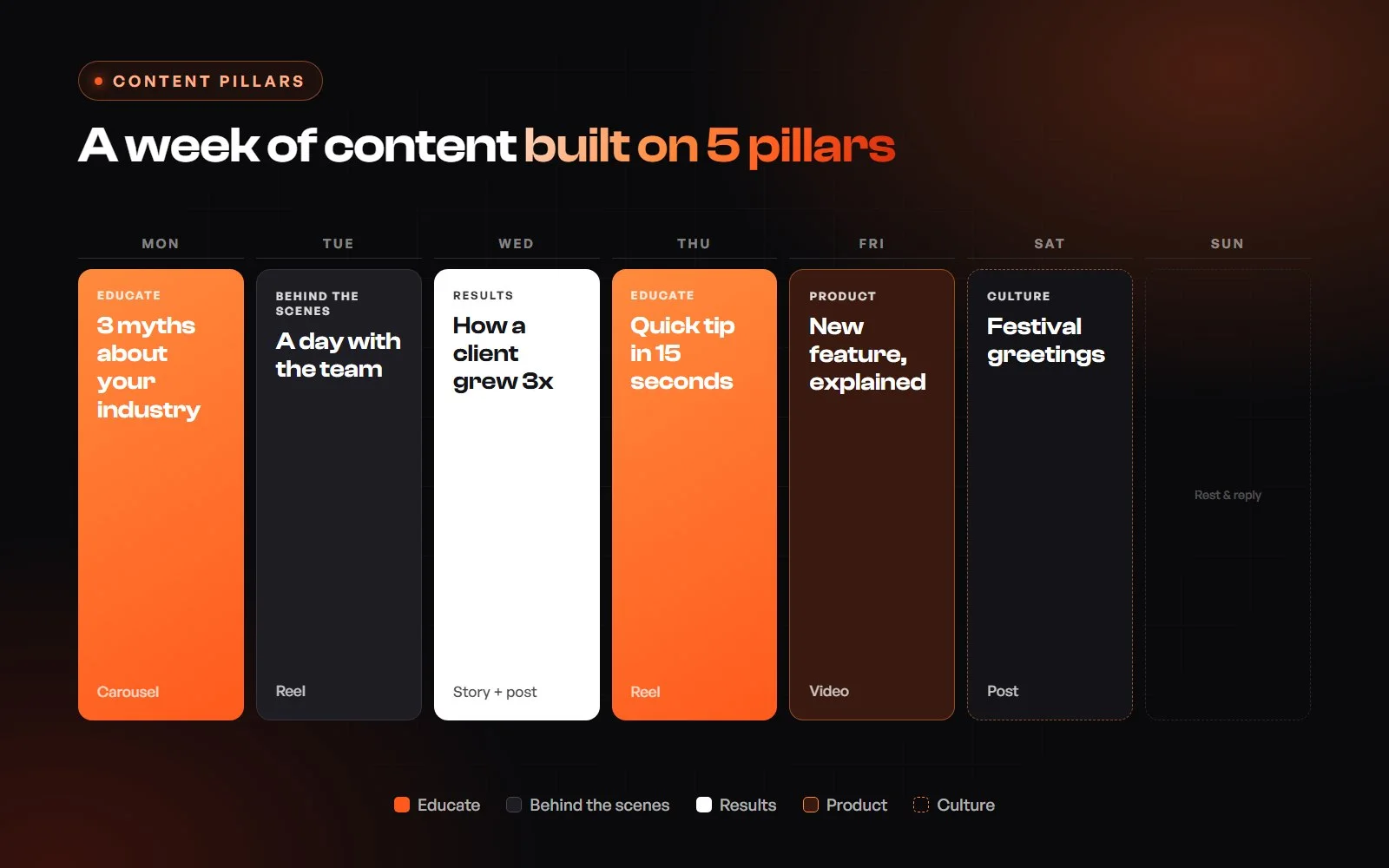
Pick three to five themes your brand will always talk about, for example education, behind the scenes, customer results, product and culture. Pillars keep content varied without losing focus, and make planning far easier.
4. Plan A Realistic Posting Rhythm
Consistency beats volume. Three strong posts a week, every week, will outperform a burst of daily posting followed by a month of silence. Batch-create content and schedule it so the calendar never depends on finding time on the day.
5. Engage, Don't Just Broadcast
Reply to comments quickly, answer DMs, comment on posts in your niche and work with creators your audience already trusts. For TalentScoutAI, reaching out directly through social channels was how early customers were found and onboarded.
What Content Performs Best In 2026?
- Short-form video: reels, TikToks and Shorts remain the biggest driver of reach. Lead with a hook, deliver one clear idea and keep it tight.
- Carousels: step-by-step guides, myths vs facts and checklists earn saves and shares.
- Behind the scenes: real people, real processes and real workplaces build trust that polished ads can't.
- Customer stories: results, testimonials and before-and-afters do the selling for you.
- Timely and cultural content: local festivals, trends and humour make a brand feel human. At Layup, seasonal posts, local humour and brand collaborations were a regular part of a content mix that lifted engagement 20% across platforms.
Write captions and on-screen text with search in mind too. People search inside TikTok, Instagram and YouTube, and clear keywords help your content get found long after it's posted.
How To Measure Social Media Success
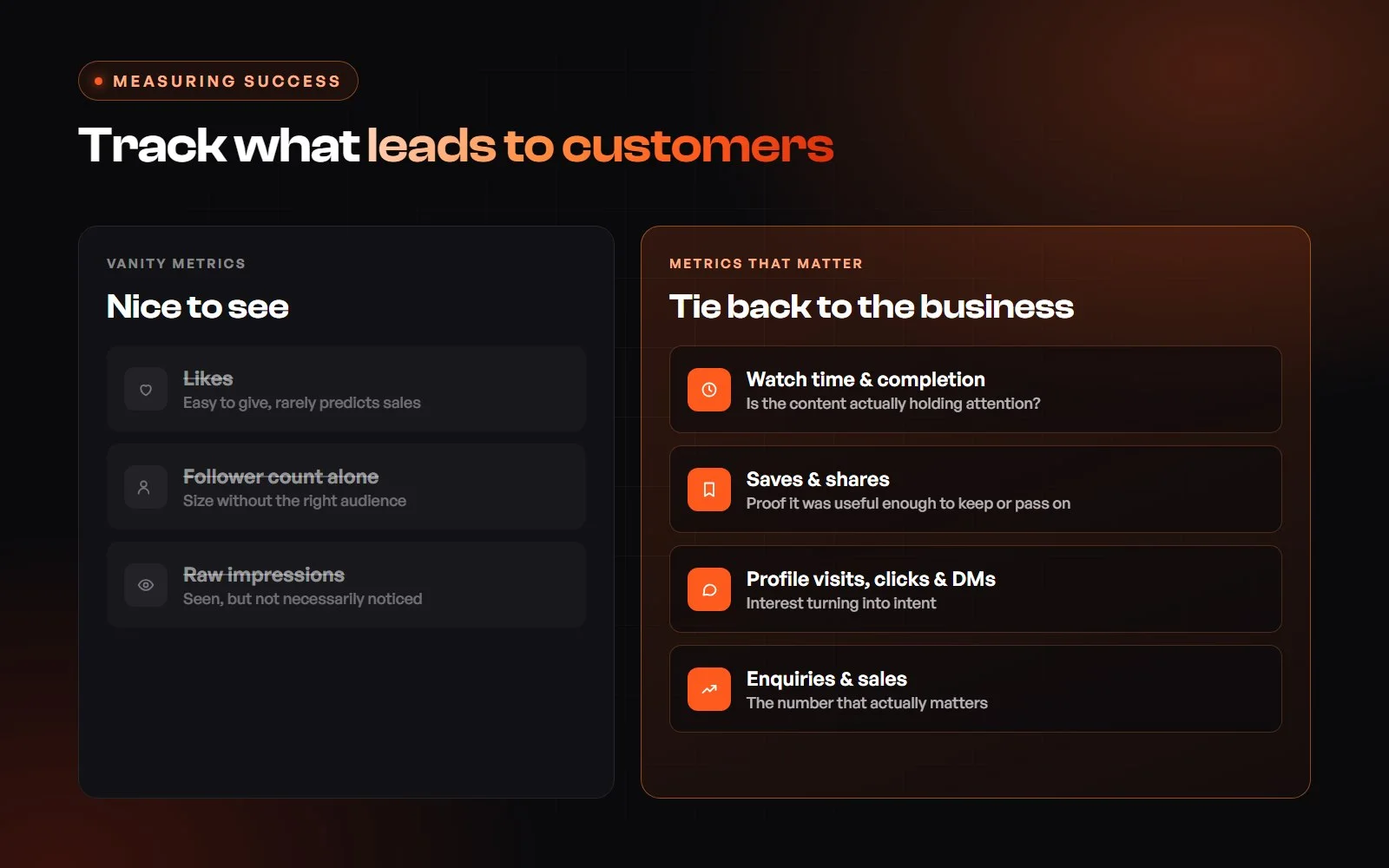
Track a few numbers that show progress toward your goal, not just vanity metrics:
- Reach and impressions: how many people are seeing your content, and how much of it comes from non-followers.
- Engagement quality: saves, shares, comments and average watch time, rather than likes alone.
- Follower growth: whether the right audience is growing steadily.
- Clicks and conversions: profile visits, link clicks, enquiries, sign-ups and sales that came from social.
Every platform has free built-in analytics, and UTM links plus GA4 show what social traffic does on your website. Review monthly, double down on the formats and topics that work, and drop the ones that don't.
Social media rewards brands that show up consistently, say something useful and treat followers like people. Do that, measure honestly and keep improving, and social becomes one of the most reliable ways to grow a brand.